
Mindfulness for Digital Detox: Peace in a Screen-Soaked World
It’s been what, five seconds? Can’t sleep, feeling anxious, or having a stressful day? Your fingers already know where the phone is, no thought, just reflex. A quick scroll, a notification check, maybe a peek at your inbox, and before you know it, your brain is chasing the next dopamine hit. It’s become our default escape, a way to take our mind off things.
We tell ourselves it’s just a habit, a harmless way to unwind. Soon enough, our brain starts to feel foggy, and our focus is scattered. You can’t fall asleep without one last scroll. Conversations get shorter. Patience, thinner. And when you’re not on your phone? There’s this strange restlessness, almost like missing something you can’t name.
And if you’re reading this right now, yes, you’re hooked too. You realized it, didn’t you? If you searched for “digital detox,” that’s because you have had enough. Deep down, you want to do something about it. This is where mindfulness for digital detox comes in. So why wait…
Let’s Take a Mindful Scroll Through…
- The Subtle Signs You Might Need a Digital Detox
- What Is the Main Purpose of a Digital Detox?
- How to Practice Mindfulness in a Digital World
- Your 30-Day Mindful Digital Detox Plan
- Finally, The Payoff…
Sometimes the signals are quiet, sneaky, and easy to ignore. But if you start paying attention, they whisper louder than any notification ever could.
The Subtle Signs You Might Need a Digital Detox
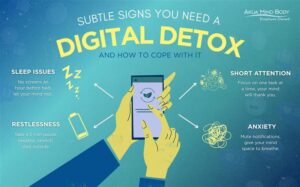
Digital burnout creeps in slowly. Notifications feel like mini heart attacks, and that phantom buzz in your pocket? Yeah, your nervous system is playing tricks. The urge to check emails “just for a sec.” has got your body wired, and your mind running in circles. The little red flags go unnoticed that tell you your screen time has gone from habit to hijack. Read on, see if you relate:
- Sleep, what’s that? Your brain can’t hit pause. That “just one more scroll” before bed keeps sleep out of reach. And by morning, caffeine feels like the only rescue.
- Restlessness when offline, even brief breaks from notifications trigger a jittery feeling; your brain is so trained to ping that silence is unsettling.
- Somehow, your world has compressed to the glowing rectangle in your hand. You’ve forgotten the feeling of stretching under open sky, stepping outside just for air, or walking somewhere without a Wi-Fi hotspot.
- Conversations feel shorter, laughter a little less spontaneous. Friends and family notice that your attention is wandering; your focus is physically there, but mentally, elsewhere.
- The tasks that once seemed doable now linger while you scroll endlessly. That “quick check” turns into hours, and somehow, productivity vanishes in the digital ether.
These aren’t catastrophic. They’re subtle nudges, your system telling you it’s time to take a break, to give yourself a chance to reset and reclaim your attention. If any of these feel familiar, congratulations, you’re human in a hyper-connected world.
What Is the Main Purpose of a Digital Detox?
The main purpose of a digital detox is to reclaim control, awareness, and calm in a world that constantly takes over your attention. Think of it like hitting the refresh button on your brain, not because technology is evil, but because your mind deserves a little breathing room. Here’s what a mindful digital detox actually does:
- Reduce mental clutter: Stepping back from notifications, alerts, and endless feeds that create a fog dulling your focus, helps you think more clearly and make decisions without scrolling.
- Reconnect with presence: Without constant distractions, you start noticing things you’ve been missing, the sound of rain, a friend’s laugh, or the texture of your morning coffee. It’s the little joys that screens often drown out.
- Protect your mental health: Stress, anxiety, and burnout don’t happen in a vacuum. By reducing compulsive device use, you give your nervous system a chance to reset, improving mood and emotional resilience.
- Restore productivity: When you’re not chasing pings, tasks get done faster, with more focus and satisfaction. Multitasking loses its appeal, and deep work returns.
- Rediscover real-life connections: Screens can make us present in body but absent in mind. A detox helps nurture relationships, quality conversations, and shared experiences that no digital feed can replicate.
In short, a digital detox isn’t punishment. It’s a way to stop, reflect, and choose how you engage with technology, rather than letting it choose for you. So, how does one go about it…
How to Practice Mindfulness in a Digital World
It’s not about giving up your phone forever or joining a tech-free commune (unless that’s your jam). What we suggest is a way to notice what you’re doing, why you’re doing it, and how it actually makes you feel. It’s about taking a breath before you reach for your phone, instead of reacting to it like being in a Pavlovian experiment.
Try the following to bring mindfulness into your digital life without feeling like you’ve joined a monastery:
- Pause Before You Scroll: That app you instinctively open? Take a tiny mental breath first. Ask yourself: “Am I opening this for a purpose, or just because my thumb knows the way?” The more you notice the habit, the less power it has.
- Single-Task Mindfully: Multitasking might feel productive, but can also be exhausting. Try to focus on one thing at a time, whether it’s checking email, reading an article, or sending a message, and really be there for it.
- Turn Off Non-Essential Notifications: Your phone doesn’t need to buzz for every like, comment, or random sale alert. Silence the noise, and you will feel small bursts of calm throughout your day.
- Create Digital-Free Zones: Try no cell phone while meals, walks, or bedtime. And viola! your surroundings, your senses, and your own thoughts get a chance to breathe.
- Journaling and Reflection: Keep a tiny log of your screen time urges and how they make you feel. Sometimes seeing the pattern in black and white is the fastest route to awareness.
- Dopamine Detox Social Media: Scrolling sparks racing thoughts, flipping between excitement, anxiety, and boredom, until a quiet moment, a walk, a stretch, a glance outside, steadies the mind.
Okay, you’ve noticed the buzz, seen the signs, and maybe even felt that jittery “I need my phone” panic. Now what? Let’s plan a step-by-step 30-day mindful digital detox plan to improve attention span without turning into a hermit.
Your 30-Day Mindful Digital Detox Plan
Think of this as a gentle bootcamp for your brain. Each day builds a little momentum and nudges habits in a healthier direction. Aim for small, satisfying wins.
Here’s how to start:
Day 1: Turn Off Notifications & Rearrange Your Home Screen: Let’s begin with a little chaos-control. Move apps around, hide the usual suspects, and silence the pings. The goal? Your phone stops screaming for attention the moment you pick it up.
Day 2: Track Your Time: Install a screen-usage app and watch the magic (or horror) unfold. Seeing where your minutes vanish is surprisingly eye-opening, and a little hilarious once you admit it.
Day 3: Declutter Your Inbox: Unsubscribe, delete, organize. Less digital clutter equals less mental clutter. It’s oddly satisfying, like Marie Kondo for your emails.
Day 4: Opt to Reflect: Take a mini digital pause. Journal, meditate, or just sit quietly and notice urges to check your phone. Reflection builds awareness, and awareness builds freedom.
Day 5: Set a Timer: Whether for social media, emails, or news, limit the time. Like portion control for your brain, it keeps dopamine spikes in check without killing curiosity.
Day 6: No Screens in Bed: Sleep like humans used to. The soft glow of your phone is secretly plotting against REM cycles. Let your brain recharge naturally.
Day 7: Delete Your Most Used “Time-Suck” Apps: We all have them. The ones that make us go down a rabbit hole for hours. Out they go, temporarily or permanently. Freedom feels good.
Repeat and adapt these habits over 30 days, and you will experience a gradual increase in device-free periods. Slowly integrate micro-mindful moments and celebrate each small victory. Soon enough, the reflexive “scroll, scroll, scroll” will feel… optional. Adjust as needed without guilt. Just tweak your plan and keep going. It’s about awareness, not perfection.
Finally, The Payoff…
Remember that restless itch to scroll the second silence hits? Now, you start to notice the small joys, the sound of coffee pouring, birds outside your window, or a friend’s laugh that feels better than any notification ping. Conversations gain depth because your focus is finally here, not on a glowing screen.
Mental clarity returns as the haze fades; decisions come easier, thoughts get quieter, and you realize how much multitasking has been stealing your peace. Your body thanks you too as you move more, breathe deeper, and your posture, eyes, and energy begin to reset.
And then there’s freedom from the addictive urge to check, scroll. You see a world that’s vibrant, chaotic, funny, and real. Mindfulness for digital detox isn’t a one-time fix; it’s a practice, a gentle reminder that you control your attention. Each conscious, mindful choice pulls you closer to focus, calm, and genuine connection …
A life where technology serves you, not the other way around.
You might also like

10 Ways To De-Stress During COVID-19 Crisis
Reading Time: 4 Minutes10 Ways To De-Stress During COVID-19 Crisis. Our world is hurting, but we still have kindness, compassion, and hope. We must take care of ourselves by making our physical and mental health a priority during this time. We must take care of our community, friends, and loved ones while still practicing social distancing. Below are […]

Repairing a Broken System: Improving Care through Education and Consultation
Reading Time: 3 MinutesImproving Care through Education and Consultation. The American Psychiatric Association (APA), the largest leading scientific and professional organization representing psychology in the United States, was recently awarded a $14.2 million grant to help improve the behavioral healthcare system. The grant was funded by the Substance Abuse and Mental Health Services Administration (SAMHSA) to initiate a […]

The Do’s and Don’ts with Antidepressants
Reading Time: 3 MinutesIf At First, You Don’t Succeed: The Do’s and Don’ts with Antidepressants “You have a major depressive disorder, and I think you will benefit from starting a selective serotonin reuptake inhibitor (SSRI), a commonly prescribed antidepressant.” This is a common phrase many doctors tell their patients who are struggling with depression. If you have experienced […]