

Mindful Eating Habits: Slow Down a Bit and Cherish the Bite While in Recovery
Finger-lickin’ good and “I’m lovin’ it, that’s the feeling we all crave when it comes to food. But somewhere between drive-thrus, deadlines, and dopamine hits, eating became more about escape than nourishment. Fast food replaced slow care, and convenience replaced connection.
This paradox is captured perfectly in California, home to both drive-thru culture and farm-to-table revolutions. Chefs like Alice Waters helped shape a movement that celebrates slow, seasonal, and sustainable food, a gentle reminder that eating can be both pleasure and presence. But food doesn’t just feed the body, it heals the mind.
Especially during recovery or detox, when your system is rebuilding balance, developing mindful eating habits becomes more than a lifestyle choice; it’s a form of self-care and restoration. To understand how nutrition supports healing, we invite you to our previous blog, “Are You Fueling Your Body for Healing?”
Here’s what we are taking a bite of:
- Mindful Eating: From Ritual to Modern Recovery
- Why Mindful Eating Habits Matter
- Awareness: Why to Practice Mindful Eating Habits
- Cultural and Meditative Mindful Eating Practices
- Therapeutic and Structured Mindful Eating Programs
- Foundational Mindful Eating Methods
- Methods That Support Recovery & Detox
- Care, Gratitude, and Healing Beyond the Plate
Mindful Eating: From Ritual to Modern Recovery
From the time cavemen discovered fire to the bustling spice markets of ancient civilizations, food was once a ritual, a moment to pause, give thanks, and feel alive. Buddhist monks later practiced silent, intentional meals, treating each morsel as nourishment for both body and mind. These early rituals laid the foundation for intentional eating or conscious meals, emphasizing awareness, gratitude, and presence.
Fast-forward to the 1990s, nutritionist Dr. Jan Chozen Bays translated these principles into everyday table practices, including her now-famous ‘raisin meditation’. Today, in our world of constant notifications and hurried meals, mindful eating has often been reduced to a side activity, yet it still stands as both a wellness practice and a cornerstone of recovery.
Why Mindful Eating Matters
Let’s begin with a question: have you ever felt that you finished a meal only to realize you don’t remember the taste of a single bite? Well, that’s your body on autopilot. With mindful eating, you sort of flip the script. When you eat slowly, you give your brain time to register fullness, which prevents overeating and improves digestion.
Research from Harvard Health shows that simply slowing down your eating pace allows your body to process food more efficiently and decreases the urge to binge. When you eat calmly, your body absorbs nutrients more effectively, lowers stress hormones, and restores natural hunger and fullness cues.
For those in detox or recovery, these habits are more than healthy routines; they’re part of rebuilding trust with your body.
Awareness: Why to Practice Mindful Eating Habits
We need to understand that being mindful while eating isn’t rigid; it’s more like a gentle conversation with yourself at the table. Before your first bite, take a deep breath and truly notice the food in front of you. Observe the colors, textures, and aromas. Ask yourself, “Am I truly hungry, or am I eating just because it’s time?”
Science shows that mindful eating does more than make you feel good. Here’s why you need to slow down at the table.
- Digestion works better when you pay attention: Studies show that eating too quickly overwhelms digestion and leads to overeating. When you chew slowly, your brain gets enough time to register fullness.
- It calms your nervous system: Eating mindfully activates the parasympathetic nervous system (“rest and digest”), helping nutrients absorb more efficiently.
- It balances hunger hormones: Stress raises cortisol, which fuels cravings. Mindful eating lowers cortisol, helping regulate ghrelin and leptin, the hormones that tell you when you’re hungry or full.
- It supports emotional well-being: As mindful eating reduces binge eating, emotional eating, and even symptoms of depression by helping people pause and check in with their real needs.
As you slow down, check in with your hunger, and savor each bite, you may realize that practicing mindfulness was probably the missing piece to truly reconnect with your body and enjoy food fully.
While science explains why slowing down works, traditions around the world have long recognized the connection between food and mind.
Cultural and Meditative Mindful Eating Practices
Mindful eating began not in laboratories but in temples, monasteries, and healing kitchens. In these spaces, food was treated as an offering, an act of reverence rather than consumption.
- Zen Buddhist Eating (Oryoki Practice): In Zen monasteries, mealtime is a meditation. The Oryoki ritual, meaning “just the right amount,” emphasizes humility and awareness. Monks eat in silence, moving deliberately with each bowl, turning every bite into a practice of mindful eating.
- Thich Nhat Hanh’s Mindful Meal Meditation: The Vietnamese Zen master brought mindful meals to the wider world. His approach encourages slow, silent eating, breathing between bites, and noticing the effort, energy, and life behind each meal. It’s a gentle reminder that nourishment is both physical and spiritual.
- Ayurvedic Conscious Eating: In Ayurveda, eating is a healing ritual. Focused, calm meals and attention to taste, texture, and aroma help align body and mind while enhancing Prana, the vital life energy. It’s all about balancing digestion, honoring the body, and practicing everyday self-care.
Therapeutic and Structured Mindful Eating Programs
As mindfulness entered Western psychology, ancient wisdom found a new language, evidence-based, therapeutic, and structured. The programs below take inspiration from meditative traditions but ground them in modern behavioral science, creating bridges between emotional health, nutrition, and self-awareness.
- MB-EAT (Mindfulness-Based Eating Awareness Training): Dr. Jean Kristeller’s MB-EAT program offers a gentle way to reconnect with food and self. Through meditation, mindful awareness, and compassion, it helps people observe their hunger and emotions without judgment, turning moments of compulsion into opportunities for calm understanding.
- Eat for Life Program (Dr. Lynn Rossy): Dr. Lynn Rossy’s Eat for Life expands upon MB-EAT by integrating intuitive eating and body positivity. The program shifts focus away from “dieting” and toward reconnecting with one’s body, rebuilding trust, gratitude, and emotional acceptance.
- Intuitive Eating (Evelyn Tribole & Elyse Resch): Created by dietitians Evelyn Tribole and Elyse Resch, Intuitive Eating merges mindfulness with self-trust. Built on ten guiding principles, including “Honor Your Hunger” and “Respect Your Fullness,” it replaces external diet rules with internal listening, now a cornerstone of recovery and nutritional therapy worldwide.
- The Center for Mindful Eating (TCME) Practices: As a global nonprofit, TCME has helped standardize mindful eating principles, offering structured meditations, reflection exercises, and the simple yet powerful cue: “Pause–Breathe–Notice.”
Through these programs, mindful eating moved from monasteries to medical settings, offering scientifically supported pathways to heal our relationship with food.
Foundational Mindful Eating Methods
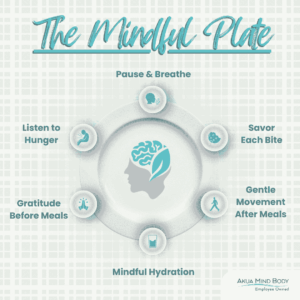
While structured programs like MB-EAT or Intuitive Eating provide a formal therapeutic framework, mindful eating truly begins with simpler, foundational practices.
- Mindful Bite Practice: Inspired by Jon Kabat-Zinn’s Raisin Exercise from his Mindfulness-Based Stress Reduction (MBSR) program, this practice invites you to eat each bite as if for the first time. Observe, touch, smell, and slowly taste your food, noticing every detail. It’s a deceptively simple exercise that awakens awareness and reveals how much of eating we do on autopilot.
- The Hunger-Fullness Scale (Dr. Jan Chozen Bays): This 1–10 scale helps you check in with your body before, during, and after eating. Instead of eating by the clock or emotion, you learn to respond to your body’s natural cues, starting when gently hungry (around a 3) and stopping when comfortably full (around a 7).
- The Pause Technique: Sometimes, all it takes is a pause before and midway through a meal to check in with your hunger, mood, and gratitude. That brief moment can prevent overeating, calm emotional impulses, and restore presence at the table.
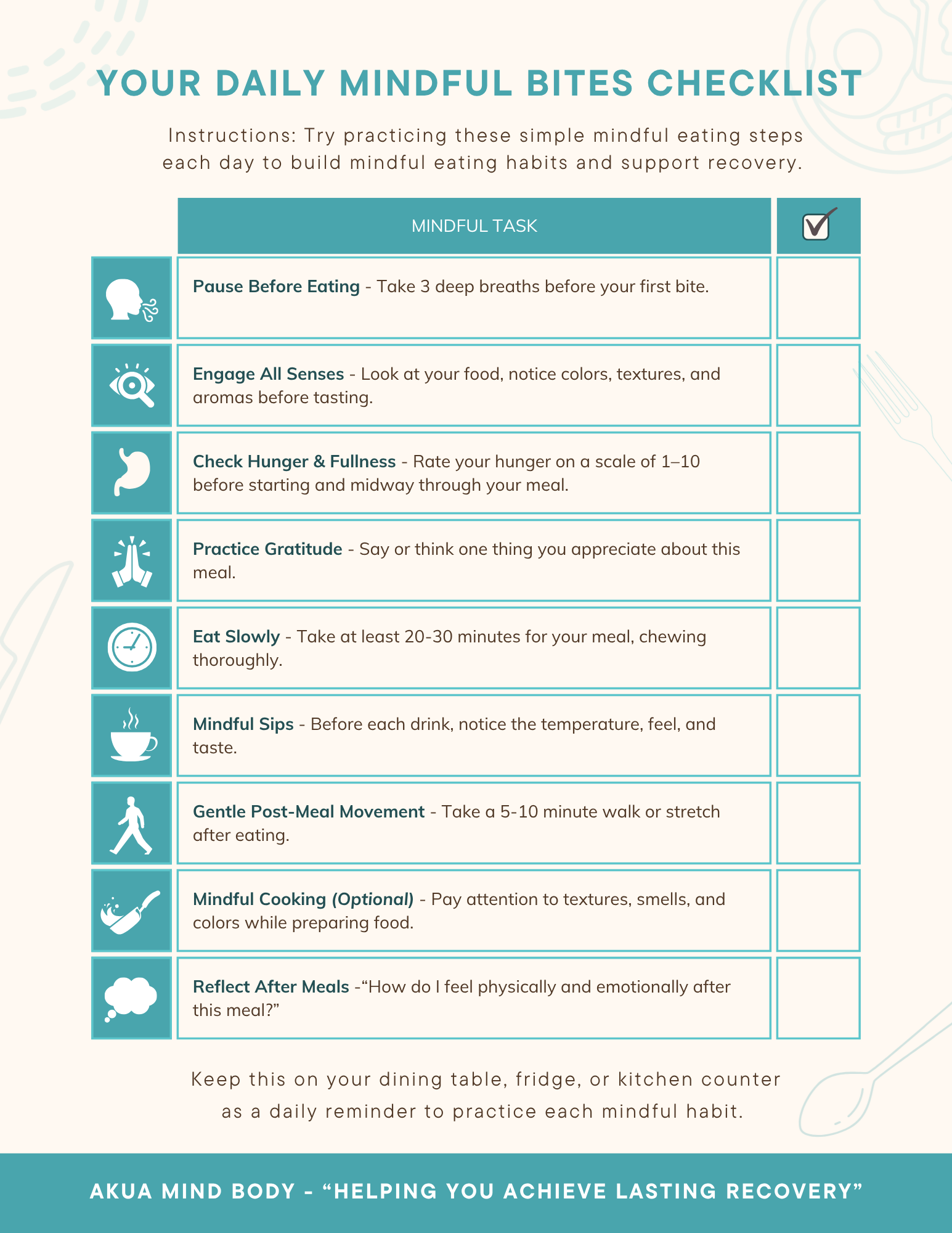
Now, with all of the history, background, and foundational methods we’ve covered, the question is: how do we bring these practices into daily life? For those in recovery, extra care and professional guidance are important, but there are still some simple methods anyone can start practicing today.
Click to download the Checklist
Methods That Support Recovery & Detox
Recovery isn’t just about what you cut out; it’s also about what you let back in. Mindful eating, drinking, and moving can transform recovery into a nurturing ritual rather than a restrictive routine.
Here’s how a few simple methods can support both physical detox and emotional healing:
- Mindful Hydration: Before each sip, pause and notice the temperature, feel, and sound of your drink.
- Sensory Grounding for Cravings: When a craving hits, simply observe it without judgment and let it pass.
- Mindful Meal Rituals: Take a moment for being thankful, journaling, or silent reflection to connect with your food.
- Mindful Portion Awareness: Pay attention to visual cues and pause before going for seconds instead of counting calories.
- Emotional Labeling: Check in with your feelings before eating to distinguish true hunger from emotional impulses.
- Gentle Post-Meal Movement: A short, mindful walk after eating helps digestion and lets you savor the meal.
- Mindful Cooking: Fully engage with the textures, colors, and aromas while preparing food to nourish both body and mind.
Care, Gratitude, and Healing Beyond the Plate
Finally, mindful eating habits aren’t about complicated diets or overwhelming rules. Even though there are methods, classifications, and plenty of scientific data showing how stress, fast eating, and autopilot habits affect digestion, hunger hormones, and emotional well-being, the practice itself is wonderfully simple. It’s about being aware of what you eat, how you eat it, and taking a moment to reconnect with your body.
If recovery is part of your journey, combining these habits with guidance programs from AKUA will be a crucial step toward healing. With mindful eating habits, over a period of time, eating slowly, noticing flavors, and honoring your body will transform each meal into a ritual of care and healing.
Every bite becomes a choice, a quiet act of self-respect, restoration, and care that nourishes far beyond the plate.
You might also like

The Role of a Sober Companion in Your Recovery Journey
Reading Time: 3 MinutesDo you ever feel your friends or family don’t quite understand what you are going through? Do you struggle to make connections in your community recovery circles? Are you nervous about seeking help from others in your recovery journey? Do you feel like you are going through recovery alone? The opposite of addiction isn’t just […]

Co-occurring Disorders: Link Between Mental Health and Addiction
Reading Time: 4 MinutesCo-occurring Disorders: Link Between Mental Health and Addiction. It is not uncommon for a loved one to enter treatment for an alcohol use disorder to soon after, be diagnosed with depression. Although their first presenting and most dangerous symptoms were associated with their high alcohol consumption, their alcohol use disorder could have been a coping […]

Unmasking Alcohol’s Hidden Toll This Awareness Month
Reading Time: 3 MinutesAlcohol Awareness Month is a time for honest conversations, not celebratory toasts. It’s about shedding light on the often-overlooked consequences of alcohol consumption, the hidden truths that lie beneath the surface of glossy advertisements and social pressures. It isn’t about shaming or judgment; it’s about empowerment through knowledge and understanding the real impact alcohol can […]