

Your Journey Matters, Too: How to Help a Loved One with Addiction
“I don’t ever want to feel like I did that day.”- Red Hot Chili Peppers
Back in the day, these lines would echo in my mind whenever I felt helpless watching a loved one spiral. Supporting a loved one with addiction is disorienting and overwhelming; you know the knot-in-the-stomach tension, the helplessness, and the quiet grief of standing on the sidelines while they fight their own battle.
There are times you wish you could erase the pain, scoop them up, and make them feel safe again. But then reality sinks in, and you realize that concern alone cannot save them. What matters just as much is your own journey: your growth, your boundaries, and your emotional stability. These are the lifelines that allow you to stand strong while supporting a loved one with addiction without losing yourself.
Johann Hari, author of Chasing the Scream, captured it perfectly: “The opposite of addiction is not sobriety, it is connection.” And that connection starts with understanding both their struggle and your role in it.
Here is our attempt to walk alongside you through that delicate balance, supporting a loved one without compromising your own well-being in the process.
How to stay strong while caring…
- Strength Starts with a Single Breath
- Stop Trying to Control, Start Protecting
- Helping Without Losing Yourself
- Stories, Reflection, and the Heart
- Be There for Yourself Too
- Boundaries With Love
- Start Believing That Your Journey Is Sacred
Strength Starts with a Single Breath
There’s a popular quote by “Jon Kabat-Zinn” aligned with Zen principles: “You can’t stop the waves, but you can learn to surf.” In other words, you cannot silence the chaos around you, but you can steady yourself within it. That steadiness begins with something so simple, so human, that we often overlook it, your breath.
So, before you do anything else, pause. Inhale deeply. Exhale slowly. Let your body remember it is alive, capable, and still here, despite the storm you’ve been weathering. That single breath may seem small, but it’s more than oxygen. It’s a reminder: you are not just surviving. You are present.
Ways to Center Yourself:
- Pause and breathe: Draw in a deep inhale, release a slow exhale, and remind yourself that you are alive, capable, and present in this moment.
- Engage in mindfulness: Whether through journaling, meditation, or a quiet walk, give yourself the gift of reconnecting with your inner self.
- Reach out: Open your heart and share your feelings with a trusted friend, therapist, or support group, knowing you don’t have to carry it all alone.
Understand that your presence matters, especially when worrying thoughts of guilt, anger, and exhaustion are swirling inside you. Finding your footing is not selfish but survival. Sometimes that grounding comes through therapy, a support group, or a trusted friend. And at times, it’s as simple as walking along a California shoreline, letting the rhythm of the waves match the rhythm of your breath.
Melody Beattie, in Codependent No More, mentions “Detach with love” isn’t about abandoning someone who’s hurting, it’s about releasing the illusion that you can carry both your life and theirs on your shoulders. In those moments, you give yourself permission to grieve, to rage, to worry, to feel fully. And to remind yourself, again and again: when supporting a loved one with addiction, their struggles are not your fault.
One such place many families find helpful is Akua Mind Body, which offers workshops and family support groups intended to help the ones you care for overcome the complexities of addiction.
Stop Trying to Control, Start Protecting
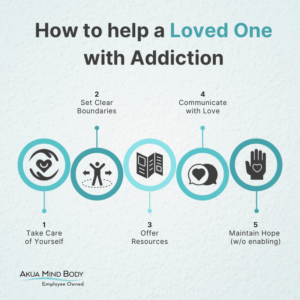
Then the hardest truth is to accept that care and affection don’t always mean steering the ship. Trying to control every move, the what, the when, the how, it can feel like a shield against uncertainty, but more often it becomes a weight that drags you down. Ultimatums, advice, promises you can’t keep, they may seem helpful in the moment, but over time, they often fuel frustration, resentment, and a sense of burnout.
Renowned psychiatrist and psychoanalyst Carl Jung reminds us: “I am not what happened to me, I am what I choose to become.”
How to Start Protecting:
- Say no to enabling behaviors while remaining present for conversation.
- Support recovery meetings without controlling outcomes.
- Limit financial or logistical involvement in ways that fuel harmful habits.
- Maintain a personal support network you can rely on for guidance and reflection.
Support provided by organizations like Akua Mind Body guides families in showing up with care while maintaining their own overall well-being. Limits become your compass, steady, patient, and rooted in love.
Helping Without Losing Yourself
Once you’ve found your grounding, support stops being frantic rescuing and becomes a steady presence. You start speaking from concern rather than judgment, offer guidance rather than ultimatums, and allow natural consequences to unfold, even when it’s painful to watch, because sometimes those consequences spark real, lasting change.
Eastern practices offer timeless wisdom here. In Mahayana Buddhism, the idea of “skillful means” or “Upaya” in Sanskrit, encourages us to act with intention, compassion, and awareness. Sometimes it is not the words we say but the calm presence we bring that becomes the real medicine that’s quiet, steady, and more healing than any lecture or pressure could ever be.
How to Show Compassion:
- Listen actively without trying to fix.
- Offer resources, guidance, or a safe space, but allow natural consequences.
- Practice patience; your presence itself is healing.
Pema Chödrön’s line, “You are the sky. Everything else, it’s just the weather,” tells us that you are the constant amid life’s storms. Your loved one’s struggles are the weather, temporary and ever-changing, but your calm, grounded presence is the sky. Staying steady doesn’t mean ignoring feelings; it means creating a safe space for connection and support, rather than reacting to every storm.
Stories, Reflection, and the Heart
Nothing beats age-old stories, immersing us in the struggles and triumphs of others. A character persisting through hardship or facing impossible challenges resonates deeply, reminding us of the delicate tightrope we all walk, fear, hope, grief, and love in balance.
Think of the movie Beautiful Boy, based on journalist David Sheff’s 2008 memoir about his son Nic’s struggles with addiction. The film brings to life their story of hardship, resilience, and the challenges of supporting a loved one through recovery.
These stories tug at your heart and reinforce that showing up steadily and being fully present, even in the hardest moments, is a powerful act of compassion.
Ways to Reflect:
- Identify moments in stories, songs (like the line at the beginning that I relate to), or movies that mirror your experience.
- Write down insights or lessons that resonate.
- Use these reflections as anchors when despair feels overwhelming.
Even a fleeting thought from a song, a scene from a movie, or a line from a book can serve as a quiet anchor in moments when despair feels overwhelming.
Be There for Yourself Too
Can’t say that enough. Your journey matters just as much as theirs. Taking care of yourself is not indulgent; it’s essential. Take a quiet moment to breathe and center yourself, notice what’s happening inside, or share openly with someone who understands.
These small, intentional acts help you remain clear-headed, resilient, and kind. If you lose your own balance, it becomes impossible to be the steady support your loved one truly needs.
Ways to Support Yourself:
- Dedicate time each day to self-care activities.
- Maintain supportive connections and safe spaces to share.
- Seek professional guidance when needed.
Each small act of self-care, each pause you take to reflect and process your feelings, builds your strength to show up with presence and compassion where it matters most.
Boundaries With Love
Finally, setting up boundaries, don’t treat them as walls, but as bridges that’s protective, compassionate, firm, and loving. They are the structure through which compassion flows safely. As Henry Cloud and John Townsend explain in Boundaries, healthy limits allow care and responsibility to coexist without losing yourself.
You can just:
- Say no to enabling behaviors.
- Prioritize your emotional health.
- Use boundaries as a box for sustainable love and support.
When you stand firm, say no to enabling, and honor your own balance, you’re practicing love in its deepest sense. Boundaries are not restrictive; they are the container for sustainable, healthy, and compassionate support.
Start Believing That Your Journey Is Sacred
Loving someone with addiction doesn’t require losing yourself. It demands patience, presence, self-care, boundaries, and deep compassion. Breathe. Stay grounded. Offer guidance, not ultimatums. Seek support for yourself, because your journey matters just as much as theirs. Even while supporting a loved one with addiction, your care, resilience, and emotional presence are what truly change lives.
Your journey is sacred. And in the midst of the storm, when you feel powerless, remember: your journey matters too. If you need support, we at Akua are always here, to listen, guide, and provide a safe space.
You might also like

National Suicide Prevention Month
Reading Time: 3 MinutesThere is no single underlying cause for suicide. Suicide often occurs when life stressors far exceed the current coping abilities of an individual who is battling a mental health disorder. September is National Suicide Prevention Awareness Month. Communities come together and share their stories and resources to help spread awareness about suicide in hopes of […]

Breast Cancer and The Effects On Your Mental Health
Reading Time: 5 Minutes“October is Breast Cancer Awareness Month, an annual campaign to raise awareness about the impact of breast cancer. This year we RISE to ensure every woman has access to the screenings she needs and the support she deserves. When we RISE, we Rally in Screening Everyone.” Screening guidelines according to the U.S. Preventative Task Force […]

How to Recognize Depression in Your Loved One
Reading Time: 3 MinutesAll too often individuals will say that they are depressed when they are feeling fed up or when things in their lives are not going as planned. And equally often, after a few days, these feelings disappear. However when an individual’s sullen mood begins to last for a few weeks and interferes with their daily […]