
A Multifaceted Approach to Tackling the Opioid Crisis in California
For countless Americans, the opioid crisis isn’t just numbers or statistics; it’s more personal. It has torn families apart, strained communities, and claimed hundreds of thousands of lives. Closer to home, the opioid crisis in California is heartbreaking. Fentanyl-related overdoses across the U.S. highlight the severity of the opioid epidemic, but in California, the impact is particularly alarming.
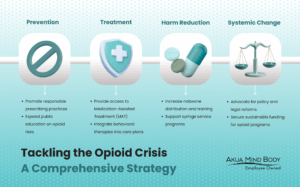
We, at Akua Mind Body, live and witness this heartbreaking reality every single day, which strengthens our resolve and makes us believe that addressing the opioid crisis requires more than quick fixes or assigning blame. It demands a multi-layered approach: education, prevention, accessible treatment, harm reduction, and systemic reform.
The opioid crisis affects us all, and everyone has a part to play. In this piece, we’ll look at the ways communities, healthcare providers, and individuals are responding to the challenge.
Here’s what’s ahead:
- When Opioids for Pain Relief Went Wrong
- Preventing Opioid Misuse Before It Starts
- Expanding Access to Treatment for Those Already Struggling
- Harm Reduction: Saving Lives Right Now
- Fixing the System, Not Just the Symptoms
- Akua and You Making a Difference
When Opioids for Pain Relief Went Wrong
A miracle for chronic pain, OxyContin, introduced by Purdue Pharma, started it all back in the mid-1990s. It was supposed to be less addictive than other painkillers. Tragically, the drug’s high potential for abuse quickly became clear. Misuse and addiction rates soared, turning what was meant to help people into a colossal opioid crisis that ended up hurting millions in the U.S.
It was shocking to see how aggressive corporate marketing, weak oversight, and an unprepared system all colluded to create the perfect storm. There are shows like Dopesick, The Crime of the Century, and Painkiller that draw attention to the human side of it. These stories give faces to what would otherwise just be numbers and show exactly how much communities, families, and individuals were affected.
If you want to dig deeper into the origins, trends, and ways to fight back, check out the CDC’s detailed guide: Understanding the Opioid Overdose Epidemic. The opioid epidemic didn’t happen overnight, nor can it be fixed overnight. So, the first step we all take is always prevention…
Preventing Opioid Misuse Before It Starts

To rein in the opioid crisis in California, prevention must start before addiction takes hold. And the most crucial tools to prevent opioid misuse are smarter prescribing practices, robust Prescription Drug Monitoring Programs (PDMPs), and public education.
1. Smarter Prescribing Practices
At the frontlines are the healthcare providers. They can significantly reduce the risk of dependency by prioritizing non-opioid pain management and prescribing lower doses for shorter durations. Programs like Prescription Drug Monitoring Programs (PDMPs) also play a critical role by tracking prescriptions and help prevent overprescribing, thus protecting patients in both the U.S. and California.
2. Prescription Drug Monitoring Programs (PDMPs)
PDMPs aren’t just mere paperwork; they save lives. These programs help stop “doctor shopping,” which happens when someone visits multiple doctors to get more opioids than a single provider would prescribe. By tracking prescriptions, PDMPs make it harder for misuse to go unnoticed.
Efforts are being made to expand and enforce these programs nationwide, as it’s essential to curb opioid misuse and address the fentanyl crisis. It also empowers both doctors and patients to have safer, more informed conversations about pain management and addiction prevention.
3. Public Education and Stigma Reduction
Our bit, we need to start having honest dialogues about addiction risks, paired with stigma-reduction efforts, we can shift public attitudes and encourage people to seek help early. In California, community outreach has shown how powerful local action can be.
There are initiatives and programs like the state’s State Opioid Response (SOR) Initiatives that support education and work to challenge stereotypes through neighborhood groups, especially in underserved areas. It’s proof that prevention isn’t only about policies or prescriptions, it’s about meeting people where they are and giving them the tools to stay safe and informed.
Expanding Access to Treatment for Those Already Struggling
Recovery shouldn’t depend on your ZIP code or bank account. Accessible, effective, and affordable treatment must be available for people already grappling with opioid addiction.
Medication-Assisted Treatment (MAT)
Removing the financial, logistical, or cultural obstacles can make the difference between life and death. MAT combines FDA-approved medications with counseling to reduce cravings and prevent overdoses. California’s MAT Expansion Project has shown promising results, particularly in under-resourced communities, making opioid treatment programs across the U.S. more equitable.
Behavioral Therapies
While MAT addresses the physical side of addiction, recovery also means rebuilding emotional resilience and support networks. Peer support groups and culturally sensitive counseling create safe spaces where people feel understood. To address the emotional roots of addiction, behavioral therapy provides healthier coping strategies and long-term recovery mechanisms.
Affordable, Inclusive Care
As mentioned earlier, cost and access shouldn’t decide who gets help. A commendable effort with California’s Medi-Cal coverage expansion for addiction services is a model for making treatment available to anyone who needs it, regardless of income or location. Building out mobile treatment units and telehealth options ensures that even rural or marginalized communities aren’t left behind.
While treatment is essential, it’s only one part of the puzzle; immediate harm reduction strategies are crucial for saving lives in the critical moments before someone makes it to a program.
Harm Reduction: Saving Lives Right Now
In California, harm reduction programs save lives every day. From widespread naloxone access to syringe service programs (SSPs), these initiatives help prevent overdoses and connect people to treatment, thus addressing the opioid crisis in California directly.
Naloxone Access Everywhere
Everyone should have access to the lifesaving overdose reversal drug, naloxone. With programs like the Naloxone Distribution Project and the CalRx Naloxone Access Initiative, California has expanded easy access to police, paramedics, and even bystanders, ensuring that they can step in during an overdose. Since October 2018, over 7 million naloxone kits have been distributed, resulting in more than 384,000 overdose reversals.
Syringe Service Programs (SSPs)
SSPs go beyond clean needles; they connect people with healthcare, addiction treatment, and social support. California has 65 SSPs across 33 counties, offering overdose education, naloxone distribution, and testing for HIV and hepatitis C. Research shows that SSPs reduce disease transmission and serve as entry points for recovery, reinforcing harm reduction programs in California.
Meeting People Where They Are
The philosophy of “Meeting People Where They Are” emphasizes respect, dignity, and individualized care. Programs like the California Overdose Prevention and Harm Reduction Initiative (COPHRI) support organizations that embody compassion and community-building.
At Akua Mind Body, our team meets individuals where they are, through outreach, counseling, and harm reduction education, helping people take the next step toward recovery. These efforts do save lives, but to end the opioid crisis, systemic changes are needed to prevent it from happening in the first place.
Fixing the System, Not Just the Symptoms
Addressing the opioid crisis in California requires systemic change. Criminal justice reform, evidence-based policy changes, and economic and social support are all necessary to tackle the root causes of the opioid epidemic in the U.S.
- Criminal Justice Reform: Addiction should be treated as a public health crisis, not a crime. Diversion programs in California connect individuals to treatment instead of jail, reducing recidivism and supporting recovery.
- Policy Change: Evidence-based policies, such as expanded access to opioid rehabilitation centers in California and funding for harm reduction programs in California, demonstrate how systemic reform can save lives.
- Economic and Social Support: Stable housing, employment, and access to mental health services are essential to preventing relapse. Addressing these social determinants of health significantly improves outcomes.
Akua and You Making a Difference
It’s our call to action. Let’s say a ‘Community Beach Day’ like the one recently held, where neighbors gather, share stories, and chip away at the shame and silence while soaking up sunshine and support. Or visit a local Akua center in Fair Oaks, Long Beach, or Sacramento, where outpatient dual-diagnosis care blends treatment with mindfulness, yoga, acupuncture, and other holistic therapies that heal mind, body, and spirit.
But partnership is a two-way street. While most of Akua’s events are for our alumni, every now and then we open our doors to the wider public, so keep an eye out for those chances to join in. Whether you show up, volunteer, or simply share what you’ve learned, every effort counts. It will take all of us to make a change, and we believe that recovery is strongest when it’s shared.
This is what you can begin with, as every small step matters:
- Start the Conversation: Be willing to talk openly about what’s really happening with opioids in your community. Share what you’ve learned, swap stories, and help take down the barriers so people feel less alone.
- Show Up Locally: Whether it’s a beach meetup, a community walk, or volunteering with Akua Mind Body, your presence makes your neighborhood stronger. A few hours is all it takes to start a ripple that can change lives.
- Speak Up for What’s Right: When you hear about unfair policies or gaps in treatment access, use your voice, call a representative, sign a petition, or simply start a conversation that can lead to change.
- Pass Along Support: If you know someone who’s struggling, connect them with a helpline or a local treatment center. Sometimes sharing a phone number or a resource can be the lifeline they need.
- Lead with Heart: Check in on people. Listen without judgment. Offer a kind word. Small acts of compassion can create a community where asking for help feels safe and welcomed.
This way, you’re not just helping individuals but building a community where recovery, understanding, and hope can thrive. We at Akua Mind Body are committed to being part of the solution, and with your support, we can confront the crisis not with fear or blame, but with understanding, action, and hope.
You can join future events, support local programs, or simply share your story, helping to build connection, understanding, and hope for those affected by addiction. And when someone you care about is on the edge, our confidential 24/7 helpline (888-629-6707) means guidance is only a phone call away.
You might also like

Unveiling the Role of Spirituality in Addiction Recovery
Reading Time: 3 MinutesSubstance abuse has had a devastating impact on the lives of millions in the United States. As substance use and abuse continue to ravage communities, researchers are working on treatment approaches that can ensure a successful recovery from addiction. Religious beliefs and spiritual practices in preventing use and relapse were commonly thought of in the […]

Residential Mental Health Treatment: A Steadier Way Forward Toward Lasting Change
Reading Time: 7 MinutesResidential Mental Health Treatment

World Bipolar Day: Rethink Mental Illness
Reading Time: 5 MinutesAnxiety and Bipolar Disorder The hope and vision of World Bipolar Day are to bring world awareness to the world about bipolar disorder and to eliminate social stigma. This mood disorder affects nearly 3% of the adult U.S. population each year. World Bipolar Day (WBD) is celebrated each year on March 30th, Vincent Van Gogh’s […]