
Why Mindfulness Might Be the Missing Piece in Your Recovery Journey
When recovery feels like an uphill battle, even the smallest step forward can feel impossible. The sleepless nights, those sudden cravings, the fear of slipping back into old patterns, these are the quiet struggles so many carry. Healing is more than just quitting a substance; it’s about rebuilding meaning, self-trust, and resilience after chaos.
The numbers tell the story: According to the National Center for Drug Abuse Statistics (NCDAS), “84.5 million or 32.8% of adults over the age of 18 have either a Substance Abuse Disorder (SUD) or Any Mental Illness (AMI). SUDs affect over 48.5 million Americans aged 12 and over.”Most common disorders are related to alcohol, marijuana, and prescription pain relievers.
This data indicates that a significant portion of the population struggles with SUDs or mental health issues, highlighting the need for effective recovery strategies like mindfulness. In California, where the opioid crisis continues to devastate communities, recovery programs are integrating mindfulness not as optional, but as evidence-based support to help manage cravings, regulate emotions, and reconnect with purpose.
Mindfulness in recovery is a science-backed practice that helps people pause, breathe, and reconnect with themselves. “With nearly 21 million adults living with a substance use disorder in the U.S, and only 10% receiving treatment (SAMHSA),” mindfulness offers a practical, accessible tool to complement traditional recovery programs.
To help in your journey, this is what we’ll look into:
- What Mindfulness Really Is
- What Mindfulness Really Means in Recovery
- The Science and Data Behind Mindfulness
- California Spotlight: Mindfulness and the Opioid Crisis
- Six Ways Mindfulness Aids Your Recovery
- How Akua Mind Body Weaves Mindfulness into Healing
- Final Word: You are stronger than today’s struggle
What Mindfulness Really Is
The roots of mindfulness date back to ancient Eastern traditions. In early Buddhist teachings, the Pali term sati (meaning “present-moment awareness”) appears in the Satipaṭṭhāna Sutta: The Foundations of Mindfulness as a guide to clarity and liberation. Hinduism also nurtured practices like dhyana (meditation) and yoga, emphasizing mindful presence and self-realization long before “mindfulness” became a buzzword.
These traditions taught that paying attention, fully and without judgment, was the key to understanding both self and world. Jon Kabat-Zinn brought these ancient principles into the modern era in the 70s. At the University of Massachusetts Medical School, he created Mindfulness-Based Stress Reduction (MBSR).
Today, mindfulness has leapt from monasteries to hospitals, therapy rooms, classrooms, and recovery centers. For those struggling with addiction or emotional challenges, mindfulness isn’t just a calming exercise; it’s a practical tool for self-awareness, resilience, and healing. Knowing the roots of mindfulness is important, but its true impact shines when it meets the challenges of recovery.
What Mindfulness Really Means in Recovery
Think, if recovery didn’t have to feel like a fight, and the missing piece wasn’t more willpower or discipline, but something quieter, more present, a way to notice what’s happening without being swept away. Mindfulness is that “act,” the act of paying attention to the present moment without judgment. That may sound simple, but in recovery, it proves to be transformative.
Life has this uncanny ability that shakes you like a snow globe, with stress, cravings, or painful memories, and everything feels blurry and out of control. Mindfulness helps gently set the globe down and let the contents settle. You can see clearly what’s inside without being swept away by it.
In simple words, it is non-judgmental, present-moment awareness. In recovery, that means noticing cravings, thoughts, or emotions without acting on them, changing the relationship you have with them. It’s not about willpower or fighting urges; it’s about seeing them, then choosing differently. This shift in tone from reacting to responding can change everything.
In recovery, mindfulness helps people:
- Catch the warning signs before they spiral out of control
- Let a single breath between what you feel and do
- Move from negative self-talk to more supportive inner dialogue
Rather than erasing difficult thoughts or feelings, mindfulness teaches people to observe them without judgment and respond intentionally. Over time, this transforms the mental acceptance of recovery from a constant battle to manageable, intentional growth.
The Science and Data Behind Mindfulness
Mindfulness isn’t just about feeling calm; it’s measurable, evidence-based, and increasingly integrated into recovery programs in the U.S.
Mindfulness-Based Relapse Prevention (MBRP) has shown impressive results: A study found that people with high substance-use severity, some also struggling with anxiety or depression, who completed “MBRP reported 96% fewer heavy drinking days and 94% fewer drug-use days at 12-month follow-up,” compared to standard relapse prevention or treatment as usual.
For women in residential treatment, the Moment-by-Moment in Women’s Recovery (MMWR) program markedly delayed the time to first marijuana use and reduced days of use, with longer mindfulness practice predicting greater gains.
To see its impact in action, we don’t have to look far: California’s response to the opioid crisis shows how mindfulness-based recovery is changing, and even saving lives.
California Spotlight: Mindfulness Meets the Opioid Crisis
California has long been on the front lines of America’s opioid epidemic, a crisis that has claimed more than 564,000 lives nationwide since the late 1990s and takes more than 150 lives every single day due to synthetic opioids like fentanyl.
To curb the devastation, the State of California has rolled out tough, proactive measures: mandatory prescription checks under its Senate bills (SB 482), opioid prescriber training requirements in SB 1109, and school-based overdose response plans through SB 10, “Melanie’s Law”.
But policy alone isn’t enough. This is where mindfulness comes into play, not as a fad, but as a science-backed intervention that saves lives. At UC San Diego, researchers developed Mindfulness-Oriented Recovery Enhancement (MORE), a program blending mindfulness, cognitive behavioral therapy, and positive psychology.
In a landmark trial, “MORE reduced opioid misuse by 45% at nine months, helped 50% of participants achieve clinically significant pain relief, and, when combined with standard care, resulted in 42% fewer relapses and 59% fewer dropouts.”
As Dr. Eric Garland, the study’s lead investigator, explained:
“Opioid addiction decreases the brain’s ability to experience natural, healthy pleasure… MORE helps restore this capacity, reducing cravings and potentially preventing opioid misuse.”
California’s success with programs like MORE and the dedicated work of treatment centers like Akua is a powerful reminder that mindfulness isn’t just a theory; it works. To understand how mindfulness transforms the recovery experience on a personal level, let’s explore six powerful ways it strengthens recovery.
Six Ways Mindfulness Aids Your Recovery Journey
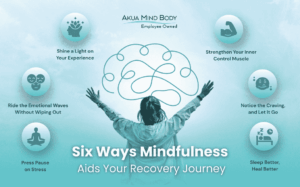
Recovery isn’t just about giving up substances; it’s about reclaiming control, transforming your inner landscape, and tuning into your true self. Here are six ways mindfulness helps you heal and truly thrive.
1. Shine a Light on Your Experience
Mindfulness acts like a mental spotlight, illuminating those fleeting thoughts, emotions, and bodily signals before they hijack your recovery. You might sense a small twinge of anxiety, rather than ignoring it or spiraling, mindfulness lets you notice it, name it, and let it pass.
Over time, this builds awareness, helping you tap into patterns early and respond with intention. Studies on peer-supported communities like Recovery Dharma show how combining meditation with social connection boosts what they call “recovery capital”, strengthening the resources we need to stay sober and whole.
2. Ride the Emotional Waves Without Wiping Out
Emotions like anger, guilt, or loneliness can feel like triggers ready to trip up your progress. Mindfulness lets you step back and simply observe them, like acknowledging the heat of a fire without jumping into it.
Instead of reacting impulsively, you pause, breathe, and choose a response that aligns with your recovery goals. This creates real emotional resilience, allowing you to face tough feelings without drowning in them.
3. Press Pause on Stress
Stress is a notorious relapse trigger. However, mindfulness not only calms your mind but also soothes your body. By lowering levels of cortisol, the body’s stress hormone, and activating your parasympathetic nervous system, mindfulness encourages rest and restoration.
For instance, an eight-week practice focusing on breath and awareness helped participants report a significant drop in anxiety and noticeable shifts in stress response patterns.
4. Notice the Craving, and Let It Go
Cravings often feel like storms threatening to drag you back under. Mindfulness gives you a new way through, think of it like the rise and fall of a wave, accept them without judgment, and let them pass.
Clinical findings suggest that those who bring mindfulness into their treatment report fewer and less intense cravings compared to traditional approaches. Over time, cravings lose their power, becoming experiences you can meet without surrendering to them.
5. Sleep Better, Heal Better
Restless nights can sabotage your emotional stability and weaken your resolve. Techniques like guided breathing and body scans can calm your mind and relax your body, paving the way for deeper sleep.
In fact, a well-regarded clinical trial found that older adults using mindfulness meditation reported significantly improved sleep quality and reduced daytime fatigue compared to those in conventional sleep education programs. Better sleep fuels a stronger, clearer mind, vital for making wise choices during recovery.
6. Strengthen Your Inner Control Muscle
Recovery often means strengthening mental muscles weakened by addiction, like focus, planning, and self-regulation. Mindfulness is like brain training: each moment you observe a thought, label it, and let it go, you reinforce neural pathways that support self-discipline and emotional control.
MRI studies show that regular mindfulness actually increases gray matter in areas of the brain tied to attention and self-regulation. That’s real, lasting change, one breath at a time.
Mindfulness isn’t a quick fix; it’s a journey of rediscovery, patience, and gentle persistence. Each mindful moment shapes new patterns and, over time, becomes the foundation of a life lived with clarity, choice, and transformation.
How Akua Mind Body Weaves Mindfulness into Healing

Across California, innovative recovery communities are proving that healing isn’t just about detox or medication, it’s about transforming the mind and spirit. From peer-led groups inspired by programs like Recovery Dharma to university-backed initiatives such as MORE, mindfulness is becoming a cornerstone of sustainable recovery.
Among these leaders is Akua Mind Body, where mindfulness isn’t treated as an afterthought; it’s woven into daily life. Morning guided meditations, afternoon breathwork, and evening mindful movement create a rhythm of intentional living. Inspired by evidence-based practices, Akua equips clients to regulate their emotions and strengthen resilience, transforming recovery from a constant fight into a journey of self-compassion and trust.
The center combines medically supervised detox with residential treatment, blending evidence-based therapies like Cognitive Behavioral Therapy (CBT), Dialectical Behavior Therapy (DBT), and Eye Movement Desensitization and Reprocessing (EMDR) with holistic options such as yoga, meditation, and brain spotting for a comprehensive, “east meets west” approach.
If you or someone you love is seeking a supportive, mindfulness-based path to healing, explore Akua’s recovery programs to see how their holistic approach can help rebuild lives with care and dignity.
Final Word: You are stronger than today’s struggle
As Buddhist teacher Jack Kornfield once said, “No matter how difficult the past, you can always begin again.”
If you or someone you love is struggling with the challenges of addiction, remember, help is closer than you think. Recovery isn’t a straight road, and you don’t have to walk it alone. Mindfulness can turn moments of doubt into opportunities for growth, reminding you that every breath is a fresh start.
We are with you every step of the way. Keep an eye out for our upcoming resources on holistic healing, recovery tools, and mindfulness practices, designed to inspire and guide your journey. Your next step could be the one that changes everything.
You might also like

Antidepressants: If At First, You Don’t Succeed
Reading Time: 2 Minutes“You have major depressive disorder, and I think you will benefit from starting a selective serotonin reuptake inhibitor (SSRI), a commonly prescribed antidepressant.” This is a common phrase many doctors tell their patients who are struggling with depression. If you have experienced depression, you most likely have seen a therapist or a physician who has […]

Facts About Ketamine & Treatment-Resistant Depression
Reading Time: 3 MinutesKetamine & Treatment-Resistant Depression. 16 million adults in the United States have had at least one major depressive episode in a given year. Depression can seep into your professional career, make you doubt your relationships, leave you in bed crying, destroy your self-esteem, and ultimately wreak havoc on your life. Treatment for depression consists of […]

How the War on Drugs criminalized Black Americans, creating barriers to treatment
Reading Time: 4 MinutesIn the 1970s, U.S. President, Richard Nixon launched the War on Drugs campaign. Nixon’s severe consequences for illegal and deadly drugs like heroin and crack cocaine crippled the black community in the 1970s and created stereotypes and harsh jail sentences for Black people. For example, the 1986 Anti Drug Abuse Act “created a 100 to […]