

Sober Living: A Step Between Treatment and Lasting Recovery
Sober living is frequently discussed as an option after residential treatment, and many resources focus on how to evaluate individual homes and identify the right fit. For readers looking for guidance on selecting a residence, you can read our article on Choosing a Sober Living Home. However, focusing only on how to choose a house does not fully explain how sober living functions within the broader recovery process.
Completing inpatient or residential treatment is an important milestone, but recovery does not end there. The weeks and months that follow often involve returning to work, securing stable housing, continuing outpatient services, and managing daily responsibilities without the routine and support provided in residential care.
At this stage, sober living homes may serve as an intermediate step. Unlike residential treatment programs, which provide intensive clinical care, or halfway houses, which are often connected to the criminal justice system, sober living homes are typically voluntary, substance-free residences that emphasize peer accountability and continued recovery engagement.
Sober living environments play an important role during this phase of recovery. Looking at the broader picture: what recovery housing involves, how it is generally overseen, how long individuals may stay, and how it fits within the larger continuum of care, can help clarify how this level of support works in practice.
- What Sober Living Is
- Why Discharge Planning Matters
- Oversight and Standards
- The First 90–180 Days After Rehab
- How Long Someone May Stay and Who Benefits
- A Step Toward Long-Term Stability
What Sober Living Is
Sober living refers to a substance-free residential environment designed for individuals who have completed a higher level of addiction treatment and want continued accountability while resuming everyday responsibilities. These residences support recovery by providing a stable place to live while individuals begin rebuilding routines associated with independent living.
Residents of sober living homes are generally expected to maintain sobriety, follow house guidelines, and participate in recovery-oriented activities. Many homes require attendance at recovery meetings, participation in house meetings, and adherence to curfews or other accountability measures. Drug and alcohol testing may also be used to help maintain a substance-free environment.
Organizations such as the National Alliance for Recovery Residences (NARR) have established guidelines that address safety, operational standards, and ethical practices within recovery housing. These guidelines outline different levels of recovery residence support, ranging from peer-managed homes to more structured environments with administrative oversight.
When considered as part of recovery planning, sober living serves as a supportive housing option that complements therapy, outpatient treatment, and other recovery services while helping individuals maintain stability and accountability.
Why Discharge Planning Matters
Discharge planning helps individuals move from intensive care to the next stage of recovery. In addiction treatment, this process usually begins toward the end of detox or residential rehabilitation. While inpatient programs provide daily therapy, structured routines, and close support, returning to independent living means many of those supports are no longer built into the day.
Because of this, discharge planning goes beyond paperwork completed before someone leaves treatment. It helps determine what level of support may still be beneficial after residential care ends. Treatment providers typically look at several practical and personal factors before recommending the next step.
A discharge plan may consider:
- Whether a stable and substance-free living environment is available
- Readiness to return to work, school, or other daily responsibilities
- Access to supportive friends, family members, or recovery communities
- Continued participation in outpatient therapy or recovery programs
- Ongoing medical or mental health needs that require follow-up care
Substance use disorders are widely recognized as chronic health conditions that require ongoing management. According to the National Institute on Drug Abuse (NIDA), relapse rates for substance use disorders range between 40 and 60 percent, a rate comparable to other long-term conditions such as hypertension or diabetes. The statistic does not mean relapse is inevitable, but it highlights the importance of maintaining support after intensive treatment.
A well-developed discharge plan often includes outpatient therapy, recovery meetings, and stable housing. For individuals who may not yet feel ready to return directly to independent living, sober living residences can provide an environment where recovery routines continue while everyday responsibilities gradually resume.
Oversight and Standards
Sober living homes operate differently from clinical treatment programs. Residential treatment centers and detox facilities must meet licensing requirements and are subject to regulatory oversight, while recovery housing follows a separate framework. Oversight in sober living generally centers on operational standards and voluntary certification models. Organizations such as NARR establish guidelines designed to promote safety, ethical practices, and resident rights.
Many recovery residences choose to align with these standards to demonstrate accountability and a commitment to supportive recovery environments. Sober living environments are also protected under fair housing laws that prohibit discrimination based on disability status, which can include substance use disorders. These protections allow recovery residences to operate within residential communities and help ensure that individuals in recovery have access to housing opportunities.
For individuals and families exploring sober living options, it can be helpful to understand the distinction between clinical licensing and recovery housing standards. Licensing applies to programs that provide medical or therapeutic services, while recovery housing focuses on offering a stable environment where individuals can continue outpatient care and rebuild daily routines.
The First 90–180 Days After Rehab
The period immediately following residential treatment is often described as a stabilization phase. Although detoxification and intensive therapy may be complete, early recovery still involves adjustment as individuals return to daily life. Research suggests that reward and stress-response systems continue recalibrating after prolonged substance use, which is why early recovery often involves a period of adjustment.
At the same time, people may be re-entering work environments, rebuilding relationships, and managing financial responsibilities. During the first three to six months after treatment, several challenges can overlap:
- Continued neurological stabilization and adjustment of stress-response systems
- Practicing emotional regulation outside of a clinical setting
- Returning to employment, education, or other structured activities
- Rebuilding financial responsibility and daily routines
- Increased exposure to environmental or social triggers
Sober living environments help moderate this adjustment. Clear expectations, such as house meetings, curfews, and accountability guidelines, provide a level of consistency while residents resume employment, education, and outpatient therapy.
During this period, the focus is less on intensive clinical care and more on developing stable routines. Peer support and shared expectations can reinforce recovery habits as individuals adapt to life outside a treatment setting.
How Long Someone May Stay and Who Benefits
There is no universal timeline for sober living. Length of stay usually depends on individual stability rather than a fixed schedule. Some individuals remain in sober living for three to six months while establishing employment and consistent routines, while others stay longer to build financial stability or secure independent housing.
Several indicators often help determine readiness for the next step:
- Consistent engagement in outpatient therapy or recovery programming
- Stable employment or educational involvement
- Demonstrated ability to manage finances responsibly
- Emotional stability when facing routine stressors
- A secure and substance-free housing plan for the next phase
- Established sober support networks outside the residence
Sober living may be particularly helpful for individuals who do not have a stable home environment, those relocating for treatment, young adults developing independent living skills, or individuals stepping down from higher levels of care who benefit from continued accountability.
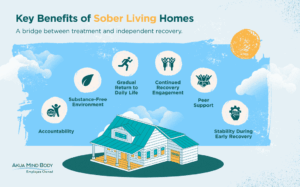
In addition to providing a stable place to live, sober living environments can offer several practical advantages during early recovery, including:
- A substance-free setting that reduces exposure to triggers
- Built-in peer support from others who are also in recovery
- Accountability through shared house expectations and routines
- A gradual return to work, school, and everyday responsibilities
- Time to strengthen coping strategies while living more independently
Many people also choose sober living proactively to reduce environmental risks while recovery habits become firmly established.
A Step Toward Long-Term Stability
Sober living works best when viewed as one phase within a broader continuum of care. Detoxification and residential treatment focus on medical and therapeutic stabilization. Outpatient programs and recovery meetings reinforce coping strategies and relapse prevention skills. Sober living then provides an environment where those skills can be practiced as independence gradually increases.
When recovery housing is coordinated with outpatient care, case management, and support services, the move toward independent living often becomes more manageable. Continued accountability helps individuals address challenges early and stay connected to recovery resources.
At organizations such as Akua Mind Body, sober living is integrated within a broader behavioral health framework that emphasizes continuity of care. This coordination allows clinical teams and recovery housing environments to work together so individuals receive support throughout each stage of recovery.
Long-term recovery is reflected not only in abstinence but also in stability, consistent employment, responsible decision-making, healthy relationships, and secure housing. When used thoughtfully within a coordinated recovery plan, sober living can provide a supportive step toward lasting independence.
You might also like
Alcoholic Liver Cirrhosis: Strictly An Alcohol-Driven Health Complication
Reading Time: 3 MinutesNearly two-thirds of the U.S. population drinks alcohol regularly, and, consequently, four million adults are identified as having some form of liver disease, as stated by the Centers for Disease Control and Prevention (CDC). Liver disease is one of the most prevailing and remarkably responsible factors for morbidity and mortality due to alcohol, yet it […]

Tips for Recovery During the Holidays
Reading Time: 3 MinutesThe holidays can be a stressful time of year for anyone and can be even more stressful if you are in recovery. Addiction is more pronounced during the holiday season, and when one individual is struggling with a substance use disorder, the entire family unit is affected. Family gatherings, hectic preparations, holiday shopping, financial stress, […]

The Facts & Side Effects of Anti-Depressants
Reading Time: 2 MinutesAnti-depressants are the first-line treatment for moderate to severe depression. These medications should always be prescribed in conjunction with psychotherapy to see the biggest improvement in depressive symptoms. But some people hesitate when beginning treatment due to possible side effects. anti-depressants-facts-side-effects Choosing The Right Anti-Depressant It is important to choose an anti-depressant based on the […]