
Neuroplasticity and Recovery: How Exercise and Nutrition Support Brain Healing
One of the most hopeful discoveries in modern neuroscience is that the brain can change. Long held to be a fixed organ after early childhood, we now know the brain retains remarkable capacity for growth, rewiring, and healing throughout our entire lives — a property known as neuroplasticity. For people in recovery from substance use disorders or mental health challenges, this science is nothing short of transformative.
At Akua Mind Body, our East Meets West integrative approach recognizes that whole-person healing requires nurturing the brain and body together. Understanding neuroplasticity is a foundational part of why our holistic care model works — and why lifestyle choices made during recovery can have profound, lasting effects on brain health and long-term sobriety.
What Is Neuroplasticity?
Neuroplasticity refers to the brain’s ability to reorganize itself by forming new neural connections in response to learning, experience, injury, or environmental changes. This happens through two primary mechanisms:
- Synaptic plasticity: The strengthening or weakening of existing connections between neurons based on activity levels.
- Structural plasticity: The physical growth of new neurons (neurogenesis) and the formation of entirely new neural pathways.
During active addiction, substances like alcohol, opioids, and stimulants alter the brain’s reward circuitry, disrupt dopamine signaling, impair the prefrontal cortex (responsible for decision-making and impulse control), and damage connections in the hippocampus (central to memory and learning). The good news: recovery allows these systems to begin healing, and specific lifestyle interventions can dramatically accelerate that process.
How Exercise Rewires the Brain in Recovery
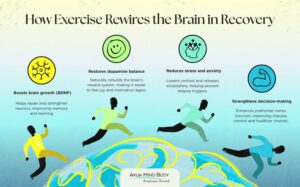
Exercise is one of the most potent, evidence-based interventions for supporting neuroplasticity during recovery. The mechanisms are well-documented:
1. Increases BDNF Production
Brain-Derived Neurotrophic Factor (BDNF) is often called “Miracle-Gro for the brain.” It promotes the growth and survival of neurons, strengthens synaptic connections, and supports learning and memory. Aerobic exercise — including brisk walking, cycling, swimming, and yoga — consistently raises BDNF levels in the hippocampus, the brain region most impacted by substance use.
2. Restores Dopamine Balance
Substances hijack the brain’s reward system by flooding it with dopamine, eventually dulling natural dopamine receptors and leaving people feeling unable to experience pleasure from everyday life — a state called anhedonia. Regular physical activity naturally boosts dopamine and serotonin production, gradually restoring the brain’s ability to experience joy, motivation, and reward without chemical assistance.
3. Reduces Stress and Anxiety
Chronic stress is one of the most powerful relapse triggers. Exercise activates the body’s natural stress-response systems, reduces cortisol levels, and increases endorphin release, creating a natural buffer against anxiety, depression, and cravings. For those dealing with trauma alongside substance use, movement-based practices like yoga, tai chi, and mindful walking offer particular benefit.
4. Improves Prefrontal Cortex Function
The prefrontal cortex governs decision-making, impulse control, and executive function — capacities that substance use disorders significantly impair. Exercise improves blood flow and oxygen delivery to this critical brain region, supporting faster recovery of executive function and strengthening the brain systems that help people resist impulses and make healthy choices.
A consistent exercise program — even 30 minutes of moderate activity five days per week — has been shown to reduce relapse rates and improve emotional regulation in people in recovery. At Akua, we integrate movement as a therapeutic tool, not just a wellness extra.
Nutrition and the Recovering Brain
The brain is metabolically demanding, consuming roughly 20% of the body’s total energy. Substance use disorders are almost universally accompanied by nutritional deficiencies that impair cognitive function, mood stability, and recovery capacity. Strategic nutritional support is therefore an essential pillar of brain healing.
Key Nutrients for Neuroplasticity
Omega-3 Fatty Acids: Found in fatty fish (salmon, sardines, mackerel), walnuts, and flaxseeds, omega-3s are critical structural components of neuronal membranes and support BDNF production. Research consistently links omega-3 consumption with improved mood, reduced inflammation, and enhanced cognitive function — all crucial for people in early recovery.
B Vitamins: B1 (thiamine), B6, B9 (folate), and B12 are essential for neurotransmitter synthesis, myelin production, and energy metabolism in neurons. Heavy alcohol use severely depletes thiamine, contributing to cognitive impairment. Replenishing B vitamins through whole grains, leafy greens, eggs, and lean proteins supports neurological repair.
Antioxidants: Substance use generates oxidative stress in the brain — essentially, free radical damage to neurons. Foods rich in antioxidants (berries, dark chocolate, green tea, colorful vegetables) counteract this damage and protect developing neural tissue during the recovery process.
Amino Acids: Proteins from food are broken down into amino acids that the brain uses to synthesize neurotransmitters including serotonin, dopamine, and GABA. Adequate protein intake — especially from diverse sources like legumes, fish, poultry, and tofu — supports stable mood and craving reduction.
Magnesium: Often depleted in those with substance use histories, magnesium plays a key role in regulating the NMDA receptor, which governs learning and memory. Foods like dark leafy greens, nuts, seeds, and avocados help replenish this critical mineral.
Blood Sugar Stability Matters
One underappreciated aspect of nutritional recovery is blood sugar regulation. Alcohol and certain drugs cause significant swings in blood glucose, and the brain is exquisitely sensitive to these fluctuations — they trigger mood instability, irritability, and cravings. Eating regular, balanced meals that include fiber, protein, and healthy fats helps maintain stable blood sugar and provides the consistent energy supply the recovering brain needs to build new connections.
Sleep: The Brain’s Repair Window
No conversation about neuroplasticity and recovery is complete without addressing sleep. During sleep — particularly during deep slow-wave sleep and REM cycles — the brain consolidates learning, clears metabolic waste products through the glymphatic system, and physically rebuilds. Research shows that sleep deprivation impairs neuroplasticity, disrupts emotional regulation, and significantly increases relapse vulnerability.
Substance use disorders frequently disrupt sleep architecture, meaning that restoring healthy sleep patterns is one of the most important and impactful early recovery goals. Practices that support sleep hygiene — consistent wake times, limiting screens before bed, reducing caffeine, and creating a dark, cool sleep environment — directly support brain healing at a neurological level.
East Meets West: Integrative Support for Brain Health
At Akua Mind & Body, we understand that lasting recovery isn’t achieved through any single intervention. Our whole-person treatment philosophy combines evidence-based clinical approaches with holistic Eastern healing traditions precisely because the science of neuroplasticity demands a multi-layered approach.
Exercise, nutrition, sleep, mindfulness, therapy, and community all activate different dimensions of neuroplasticity. When these elements are coordinated and individualized — as they are in our PHP, IOP, and residential programs — the cumulative effect on brain healing far exceeds what any one intervention can achieve alone.
Neuroplasticity is proof that the brain you have today is not the brain you are stuck with. Recovery is not just behavioral change — it is biological transformation. And with the right support, that transformation is within reach for everyone.
Taking the Next Step
If you or a loved one is navigating substance use or mental health challenges and wants to understand what whole-person, brain-informed treatment looks like, we invite you to reach out to Akua Mind Body. Our team integrates the latest neuroscience with compassionate, culturally informed care to help each person build the neural foundations of a lasting, healthy life.
You might also like

Breathwork: How Learning to Breathe More Intentionally Can Support Wellbeing
Reading Time: 6 MinutesOf all the things that keep us alive, breathing may be the one we notice the least, yet within this automatic act lies one of the most accessible ways we can influence both mind and body. Breathing is one of the body’s most remarkable functions, constantly working to regulate energy, focus, and emotional balance. When […]